
Dermatological
Skin Microbiome: role, imbalances, and solutions. Discover the dermatological expertise of Boplume Dermatology
Dermatology is a science that focuses on the skin, mucous membranes, and also skin appendages (hair, body hair, and nails). This medical specialty allows for the diagnosis, treatment, and prevention of skin diseases. Far from being a simple covering for the body, the skin reflects and reveals our state of physical and mental health. It is what connects us to the outside world and what protects us from it. An immense organ composed of several layers of tissue (the epidermis, the dermis, and the hypodermis), the skin is naturally preserved by a marvelous ecosystem made up of microorganisms: the skin microbiome .
SKIN AND MICROBIOME
We already know the importance of intestinal flora and the essential role of its billions of microorganisms in digestion and immunity.
The health of our skin also relies on a living ecosystem: the skin microbiome.
Composed of billions of bacteria and microorganisms living on the surface of our skin, the skin microbiome acts as a true living shield.
It fights against pathogenic bacteria and strengthens the skin's barrier function against allergens, pollutants, and irritating substances. The skin microbiome is a constituent element of the barrier function. It plays a fundamental role in protection, skin tolerance, and maintaining the skin's physiological balance.
WHAT HAPPENS WHEN THE SKIN MICROBIOME IS UNBALANCED?
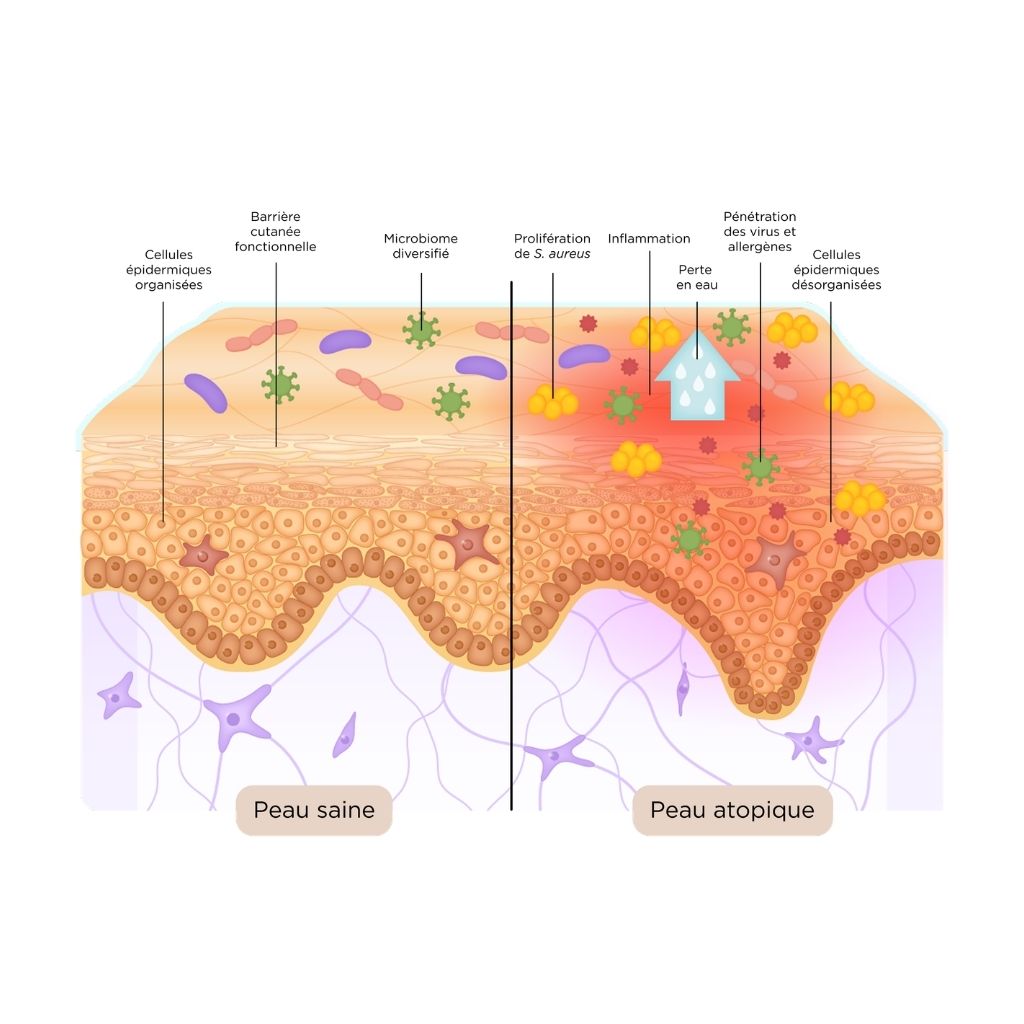
The skin microbiome is a fragile ecosystem. Certain internal and external factors can create an imbalance and alteration of the skin barrier, potentially leading to inflammatory conditions such as genetic predisposition, climate, pollution, UV, diet, smoking, stress, anxiety, fatigue, perspiration, irritating and overly aggressive cosmetic products, and medical treatments.
We then speak of dysbiosis. Dysbiosis can be defined as an alteration, in its composition and function, of the skin microbiome. In sensitive, dry to atopic-prone skin, the microbiome is frequently imbalanced, which contributes to the alteration of the skin barrier and the increase in reactivity, irritation, and discomfort.
An increase or decrease in bacterial diversity promotes the emergence of pathogenic bacteria that can lead to the development of certain skin conditions such as eczema, psoriasis, dandruff, or acne.
Damage to the skin barrier.
The microbiome acts as a natural shield by preventing the proliferation of pathogenic microorganisms (bacteria, fungi, yeasts). When the balance between good and bad bacteria is disrupted, the skin barrier weakens, making the skin more vulnerable to external aggressors (pollution, allergens, irritants).
Inflammation and skin reactions.
An imbalanced microbiome can cause an excessive immune response in the skin, triggering inflammatory processes.
This manifests as redness , itching or burning sensations, and can aggravate conditions such as eczema or dermatitis .
An imbalance in the microbiome can also promote the proliferation of certain bacteria responsible for acne or rosacea.
This leads to an overproduction of sebum, pimples, blemishes or a chronic inflammatory reaction .
Dryness and dehydration.
A healthy microbiome participates in the production of certain lipids, such as ceramides, which maintain skin hydration. If the microbiome is unbalanced, the skin retains less water, leading to dryness, flaking, and discomfort .
MICROBIOME+ ROUTINE
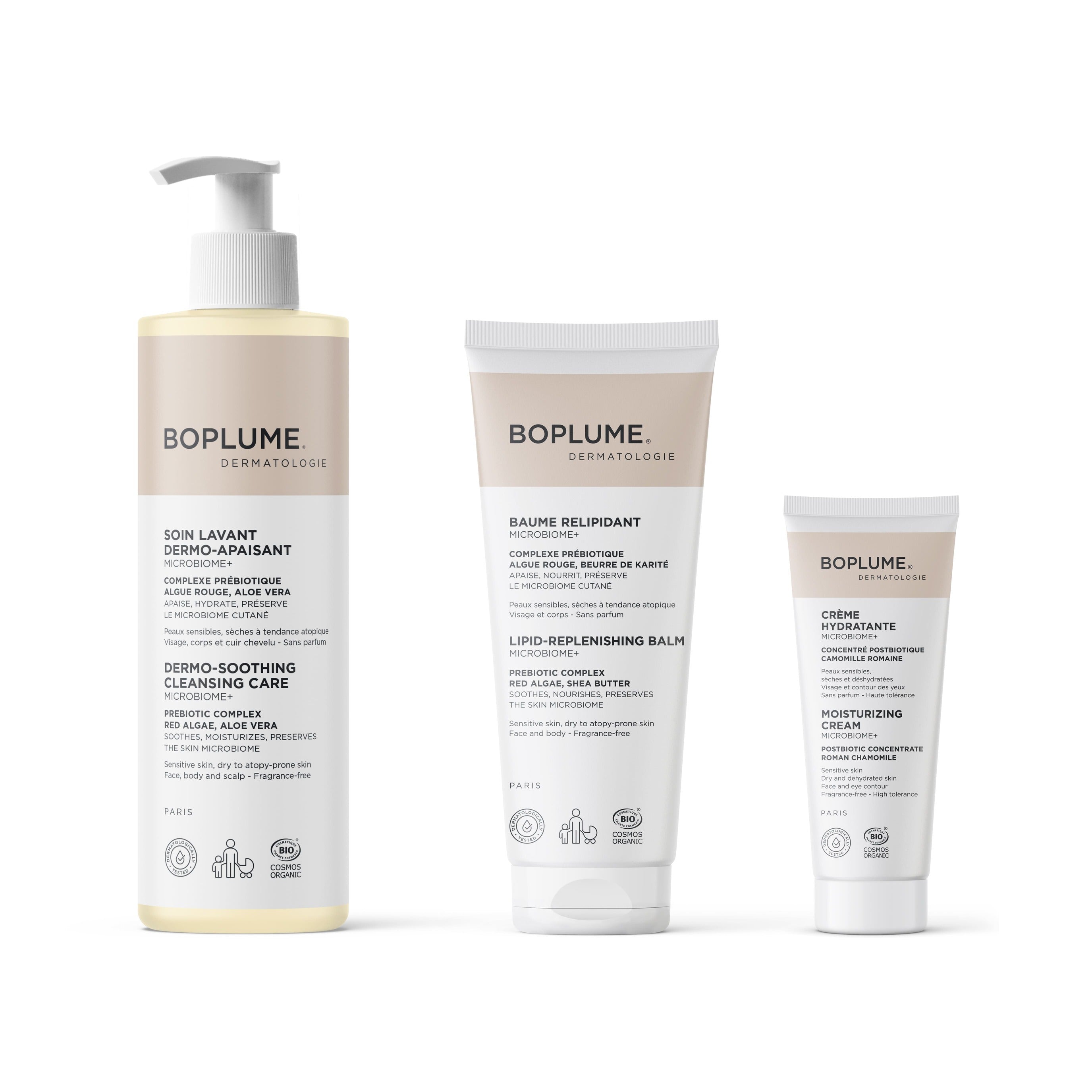
Preserving the skin microbiome balance is a priority for maintaining healthy skin. A suitable skincare routine helps to restore microbiome balance, strengthen the skin barrier, and calm inflammatory reactions.
Supported by extensive research, the effectiveness of our solutions in preserving the skin microbiome balance has been scientifically proven. All our skincare products have been tested on the skin microbiome and take into account the latest scientific advances.
Thanks to carefully selected active ingredients, our natural and organic formulas minimize microbiome disruptions, thus preventing inflammation and dysbiosis.