
The different types of eczema: understanding to take better action
Eczema is not just a fleeting irritation: it is a chronic inflammatory skin disease affecting approximately 15 to 20% of children and nearly 5% of adults in France.
It manifests as intense itching, red patches, and persistent dryness, which can significantly impact quality of life.
However, eczema is not a single disease. There are several forms, each with different causes and specific characteristics.
The most common are:
- Atopic eczema.
- Contact eczema.
- Seborrheic dermatitis.
- Hand eczema.
- Nummular eczema.
1. Atopic dermatitis (atopic eczema)

This is the most common form: it affects 1 in 5 children and approximately 1 in 20 adults.
Why does it appear?
- The skin barrier is fragile.
- The immune system overreacts.
- The skin microbiome is unbalanced.
As a result, the skin becomes permeable to allergens, colonized by bacteria such as Staphylococcus aureus, and inflammation sets in.
Symptoms:
- Redness.
- Dryness.
- Itching, localized especially on the face, neck, and folds (elbows, knees).
Good practices:
- Use gentle cleansing products.
- Moisturize daily with an emollient.
- Avoid triggers: stress, cold, pollen.
2. Contact eczema
Approximately 15 to 20% of the population has contact sensitization. In this case, the skin reacts after repeated contact with a substance.
- Irritant form : caused by aggressive products (detergents, solvents, disinfectants).
- Allergic form : triggered by an allergen (nickel, perfume, preservatives, dyes).
The right actions:
- Identify and avoid the responsible substance (patch test if necessary).
- Repair the skin barrier with lipid-replenishing treatments.
3. Seborrheic dermatitis
It affects about 4.4% of the world's population.
Why?
It appears in sebum-rich areas (scalp, eyebrows, sides of the nose, chest), favored by a proliferation of the Malassezia fungus.
Symptoms:
- Red, greasy, yellowish patches.
- Often confused with psoriasis, but thinner.
Good practices:
- Gentle antifungal shampoos.
- Sebum-regulating treatments.
- Avoid overly rich creams.
4. Hand eczema
Very common, it affects 9 to 14% of the population each year.
Symptoms :
Small, itchy blisters filled with clear fluid, located on:
- The palms.
- The sides of the fingers.
- Sometimes the soles of the feet.
The right actions:
- Dry your hands and feet thoroughly.
- Limit repeated exposure to water and irritants.
- Apply non-occlusive emollients.
5. Nummular (discoid) eczema
Rarer (≈ 2 people out of 1000, or 0.2%), it mainly affects adults.
Symptoms :
- Round, red, dry or oozing patches.
- Located on the legs, arms or torso.
The right actions:
- Intensely moisturize with rich balms.
- Clean with gentle care.
- Avoid scratching, as this worsens the lesions.
6. THE ROLE OF THE SKIN MICROBIOME
Regardless of the type of eczema, two common mechanisms are found:
- A weakened skin barrier.
- An imbalance in the microbiome.
The skin microbiome, composed of billions of protective microorganisms, plays a key role in:
- Regulating immunity.
- To reduce inflammation .
- Protect the skin against unwanted microbes.
When it is disrupted (dysbiosis), the skin becomes more vulnerable and eczema flare-ups are promoted.
7. Good daily habits
1. Cleanse without irritating:
- Gentle cleansing care (soap-free, sulfate-free, physiological pH).
- Lukewarm water, gentle pat dry.
2. Hydrate and repair:
- Daily application of an emollient (cream or balm). Ideally after showering and as often as needed. This simple step reduces the frequency of flare-ups.
3. Limit triggers:
- Cold, heat, friction, "wet work," irritating products, known allergens,
- Appropriate protection: gloves, soft clothing.
4. Support the microbiome:
People with eczema often exhibit:
- A loss of microbial diversity.
- Overcolonization by Staphylococcus aureus.
- Increased inflammation.
To rebalance this protective flora:
- Choose gentle formulas (without harsh soap, irritating preservatives, or fragrance).
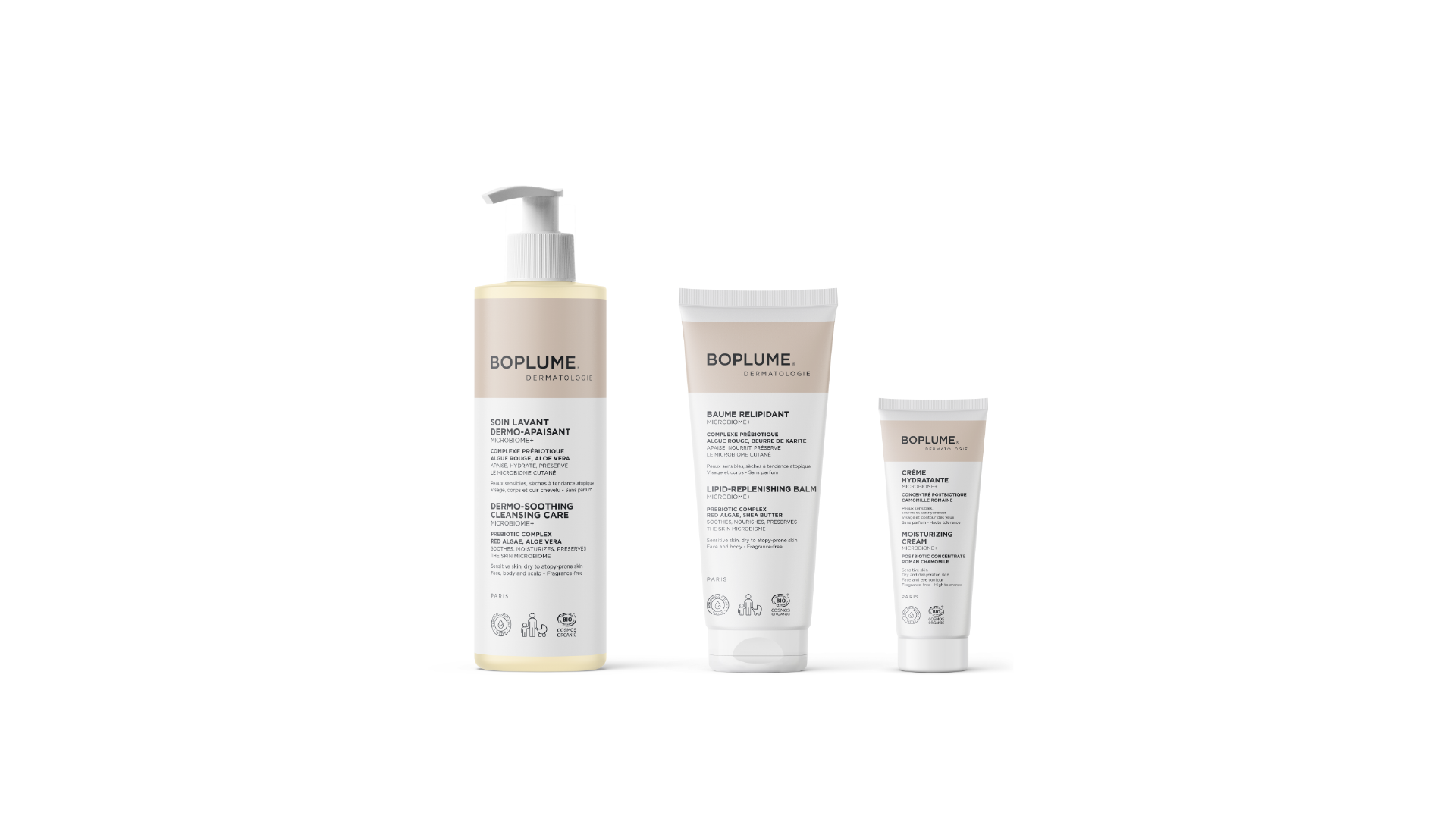
- Prefer skincare enriched with prebiotics and postbiotics.
- Opt for High Tolerance, natural products that reduce irritation and strengthen skin balance.
This approach centered on the skin microbiome is now considered an innovative complement in the management of eczema.
KEY POINTS TO REMEMBER
- Eczema encompasses several diseases: atopic, contact, seborrheic, hand and nummular.
- The common key: a weakened skin barrier and an unbalanced microbiome.
- Gentle care, regular hydration, and respecting the microbiome help to better control flare-ups.
Sources / Bibliography
- INSERM – Epidemiological data France and Europe (2024).
- Contact Dermatitis Journal – Data on contact eczema (2023).
- Journal of the European Academy of Dermatology and Venereology – Prevalence of seborrheic dermatitis (2024).
- Contact Dermatitis Journal – Prevalence and burden of hand eczema (2023).
- French Society of Dermatology – Recommendations 2025.
- Frontiers in Cellular and Infection Microbiology (2022) – Skin microbiome and atopic dermatitis.